
 Australia’s infrastructure pipeline is, by almost any measure, extraordinary. Hundreds of billions of dollars in committed spending across transport, energy, water, defence, and social infrastructure is reshaping the physical landscape of the country. The scale of ambition is real.
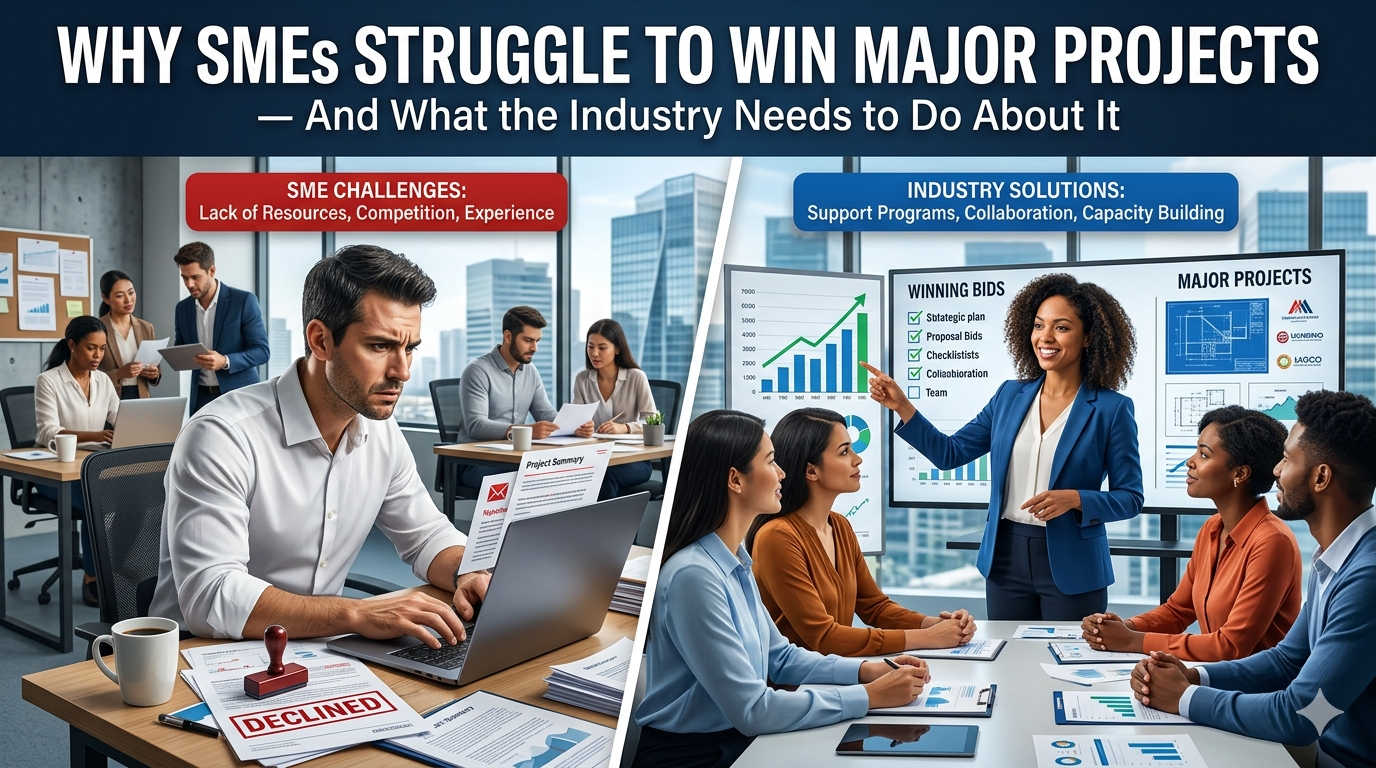
Yet for many small and medium enterprises (SMEs) operating in the construction and engineering sectors, this pipeline feels like a feast happening behind a locked door. The work is there. The opportunity, in theory, is there. But in practice, the pathway from capability to contract — from genuine competence to a seat at the delivery table — remains stubbornly narrow for smaller businesses.
This is not a fringe issue. The concentration of major infrastructure contracts among a small number of Tier 1 contractors creates genuine risks for the sector: skills bottlenecks, reduced competition, limited innovation, and supply chains that are fragile because they are under-diversified. Understanding why SMEs struggle — and what can practically be done about it — matters for the health of the whole industry.
Another increasingly important factor for SMEs participating in major infrastructure projects is digital security readiness. Tender portals, project management systems, document-sharing platforms, and compliance databases now hold large volumes of commercially sensitive information — from pricing submissions to insurance documentation and project credentials. Yet many smaller businesses still operate with weak password practices or shared team logins that expose them to unnecessary cyber risk. As infrastructure procurement becomes more digitised, simple security measures like using strong, unique passwords across business systems are becoming part of professional operational hygiene. Resources like Strong Password Generator are helping smaller contractors and engineering firms create secure credentials quickly, reducing vulnerabilities without adding complexity to already stretched teams.
The Structural Barriers Are Real
When SME leaders are asked why they find it difficult to participate meaningfully in major projects, the answers are consistent. They are not complaints about their own capability. They are observations about how the procurement and delivery system is structured.
Prequalification and Accreditation Requirements
Many government and private sector owners require prequalification before a business can even tender for work above certain contract values. These systems are designed to manage risk, and that purpose is legitimate. But for SMEs, the cost and administrative burden of maintaining prequalification across multiple agencies and clients is significant. Time spent on accreditation is time not spent on delivery. For a twenty-person business, this is not a minor inconvenience — it is a material constraint on capacity.
Risk Profiles That Exclude Smaller Businesses
The commercial and insurance requirements embedded in major project contracts are frequently calibrated for Tier 1 businesses. SMEs may have the technical capability to perform specific packages of work to a high standard, but cannot satisfy the bonding, insurance, or balance sheet requirements that are specified in the contract. In many cases, those requirements were not deliberately designed to exclude SMEs — they are simply a reflection of the scale at which the contract was conceived.
Tender Costs and Evaluation Timelines
Preparing a compliant, competitive tender response for a major project package requires significant investment of time, expertise, and often third-party support. For an SME with limited business development resources, the cost of a tender that does not convert is not just a financial cost — it is an opportunity cost. Resources committed to a losing tender are resources not deployed on existing work or other opportunities. When evaluation timelines stretch over many months, the uncertainty compounds.
The Role of Tier 1 Contractors in SME Access
It would be incomplete to discuss SME access to major projects without examining the role of the head contractors who manage the delivery of those projects. Tier 1 contractors sit between owners and SMEs in most major project supply chains. Their procurement decisions — how they package subcontract work, how they evaluate subcontractors, what commercial terms they impose downstream — shape the practical reality of SME access far more than owner procurement policies alone.
There are genuine examples of Tier 1 contractors who manage their supply chains in ways that develop SME capability, provide fair commercial terms, and create genuine pathways for smaller businesses to build track records on major projects. These are the relationships that produce thriving, resilient supply chains.
There are also procurement practices that are less constructive — extremely short payment terms, onerous subcontract conditions, or packaging of work in ways that only large subcontractors can competitively price. These practices are not universal, but they are not rare either, and they have a compounding effect on the capacity of SMEs to participate in and benefit from the infrastructure boom.
What the Data Tells Us About Industry Concentration
The concentration of major infrastructure contracts among a small number of large contractors is not unique to Australia, but the dynamics of the Australian market make it a particularly acute issue. A relatively small number of Tier 1 contractors compete for the largest packages. A slightly larger number of well-capitalised Tier 2 businesses fill the next tier. Below that, SMEs compete intensely for subcontract packages that are often structured without explicit consideration of the businesses that will actually need to perform them.
This concentration creates several risks that are now becoming visible at the portfolio level. When the pipeline is large and the number of capable Tier 1 contractors is limited, workforce and supply chain capacity becomes the binding constraint. Projects compete with each other for the same labour and materials. Costs rise. Schedules slip. And the SMEs who might contribute meaningfully to capacity relief are locked out of the system by the very barriers described above.
Practical Pathways: What Is Working
Despite the barriers, there are approaches that are demonstrably improving SME access to major project opportunities. These are not theoretical policy positions — they are practices being implemented today by owners, contractors, and industry bodies who have decided that supply chain diversity is a strategic priority.
Industry Capability Networks
Platforms that connect project owners and head contractors with pre-screened SME suppliers — providing transparent information about capability, capacity, and track record — reduce the search and evaluation costs that make SME engagement feel too difficult. Programs like ICN (Industry Capability Network) in Australia are examples of this model operating at scale. They do not eliminate all barriers, but they materially reduce the information asymmetry that disadvantages smaller businesses.
Structured Subcontract Packaging
Owners and head contractors who deliberately structure subcontract packages at a scale where SMEs can competitively respond — rather than bundling work to minimise the number of contracts to manage — create genuine opportunities for smaller businesses to participate. This requires upfront effort in work packaging strategy, but it produces supply chains that are more competitive, more diverse, and ultimately more resilient.
Early Supplier Engagement
Engaging potential subcontractors and SME suppliers early in the project lifecycle — before the tender is finalised — allows owners and head contractors to understand what the market can provide, how work should be packaged, and what support smaller businesses might need to participate effectively. This is a well-established principle in collaborative procurement models that has clear application to SME engagement.
Proportionate Commercial Conditions
Reviewing subcontract terms to ensure that insurance, bonding, payment, and risk requirements are proportionate to the scale and nature of the work being subcontracted — rather than simply flowing down the head contract conditions in their entirety — is one of the most direct levers available to head contractors. Fair commercial conditions attract stronger competition and better-performing subcontractors.
The Policy Dimension
Government, as both a major project owner and a policy-setter for the construction and engineering industries, has a meaningful role to play in improving SME access. Procurement policies that set explicit expectations for local and SME content, that require head contractors to demonstrate engagement strategies for smaller businesses, and that evaluate tender responses on supply chain development capability — not just price and program — send clear signals about what the market should prioritise.
Several Australian state governments have implemented SME participation requirements or targets in major project contracts. The evidence on their effectiveness is mixed, largely because compliance is easier to demonstrate through reporting than through genuine supply chain development. What matters is not the target — it is the commercial environment and support structures that determine whether smaller businesses can actually succeed in those contracts.
Building the Pipeline That Feeds the Pipeline
The infrastructure pipeline will only deliver its full economic and social value if the businesses capable of delivering it — at every tier — are healthy, competitive, and able to grow. SMEs are not peripheral to this story. They are a critical part of the supply chain capacity that makes major project delivery possible.
Improving SME access to major projects is not an act of charity toward smaller businesses. It is a rational response to the supply chain risks that concentration creates. Owners, head contractors, government agencies, and industry bodies who take SME development seriously are not just doing the right thing. They are building the resilient, competitive supply chains that complex project environments require.
The conversations on Beyond the Plan regularly surface exactly this tension — the gap between the stated intent to support SME participation and the procurement and commercial practices that inadvertently undermine it. Closing that gap requires practical action, at every level of the delivery system.
The pipeline is extraordinary. The question is whether the industry is building the capability — across all tiers — to actually deliver it.